Technology, Cybersecurity & AI Governance
A Small Sea Drone Shows How Maritime Surveillance Is Changing
A California company’s autonomous surface vessel recorded a Chinese destroyer near the Philippines, highlighting how low-cost commercial systems can collect strategic data close to military platforms.
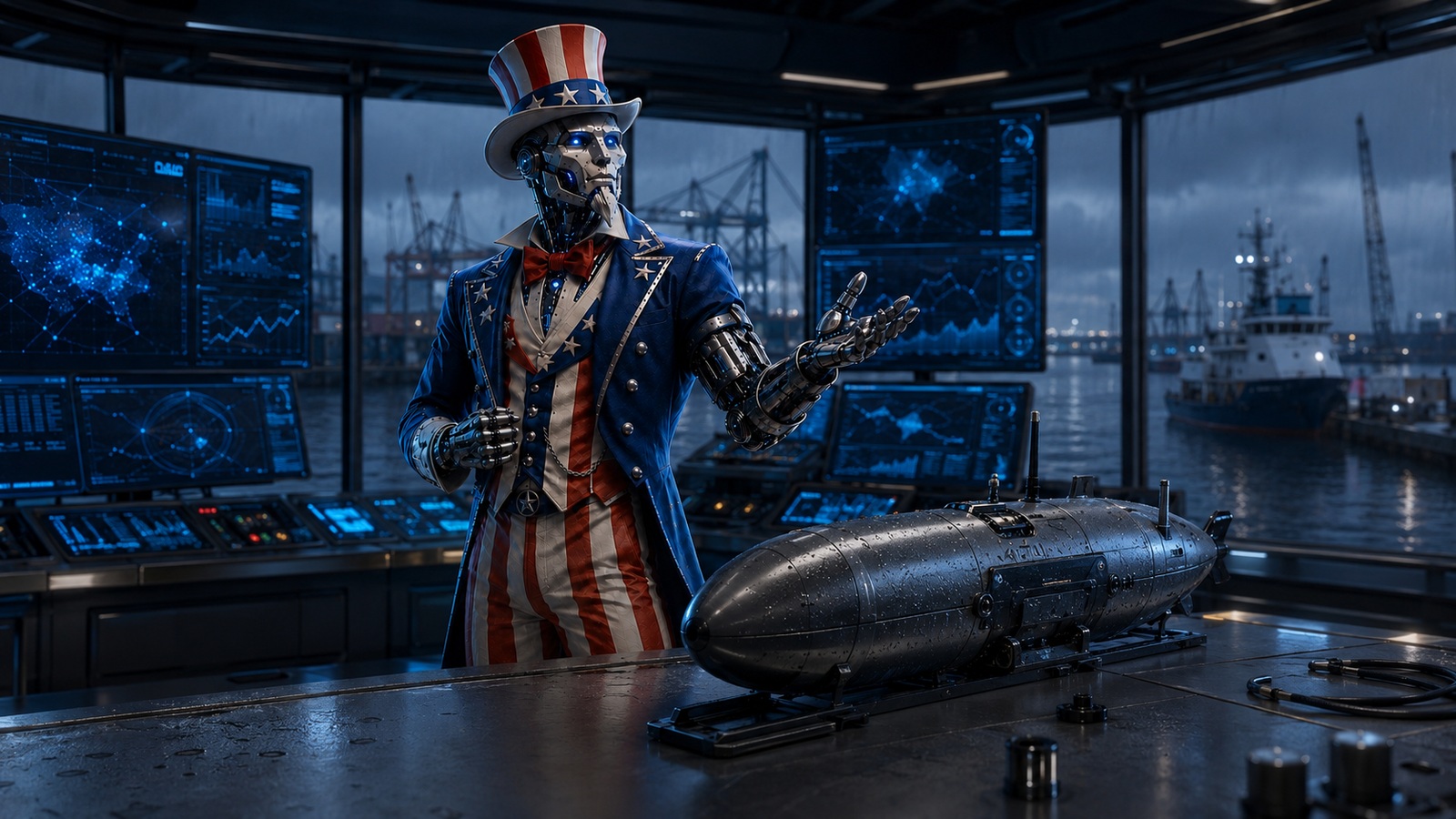
A small autonomous surface vessel has put a large strategic question on the screen: who can collect meaningful intelligence near a military ship, and how quickly can that capability spread? Reuters reports that a California company’s Lightfish drone recorded a Chinese Type 052D destroyer operating in waters near the Philippines. Reuters independently verified the video, location, vessel type, and date.
The important fact is not that a commercial drone defeated a warship. The report does not establish that the vessel was invisible or that it posed an attack threat. It shows that a relatively inexpensive, low-profile system can approach a major naval platform, record imagery, and potentially carry other sensors. The company says its vessels can operate for months and have carried electro-optical, infrared, signals-intelligence, electronic-warfare, and sonar payloads.
That changes the surveillance equation. Traditional intelligence platforms are expensive, scarce, and usually identifiable. Commercial autonomous systems can be bought, modified, launched by a small team, and deployed in large numbers. They may support scientific research, maritime safety, environmental monitoring, or journalism. The same hardware can also create a persistent record of ship movements, radar activity, and patterns around sensitive waters.
Law and policy have not caught up with every use case. A commercial drone operating inside an exclusive economic zone is not automatically a spy platform or a military asset. Jurisdiction, consent, navigation rules, radio emissions, data storage, export controls, and the purpose of the mission all matter. Governments must avoid treating every private sensor as hostile while still recognizing that collected data can be repurposed.
The next questions are practical. Who owns the raw files? Are they retained, sold, or shared with governments? What safeguards prevent a civilian mission from exposing crew locations or escalating an encounter? Can authorities identify the operator and verify the payload? Are companies prepared for a vessel to be seized, jammed, spoofed, or used as cover for a more dangerous system?
Uncle Sibursam’s warning is that the future will not arrive as one dramatic robot. It will arrive as thousands of ordinary devices with better autonomy, longer endurance, and cheaper sensors. The verified event shows capability, not intent. Policymakers should focus on rules that distinguish peaceful research from covert collection, protect maritime safety, and make data handling auditable. Technology is not automatically benign because it is commercial, and it is not automatically military because it is autonomous. The accountability question is what the system can do, who controls it, and what happens when a low-cost machine enters a high-stakes space.