
Law & Constitution
Immigration and Customs Enforcement officer Christian Castro walked out of a South Texas jail Thursday while Minnesota's effort to extradite him remained unresolved. Minnesota prosecutors have charged Castro with four felony assault counts connected to the January shooting of Venezuelan national Julio Sosa-Celis during a federal immigration operation in Minneapolis. The charges are allegations, and Castro has not been convicted.
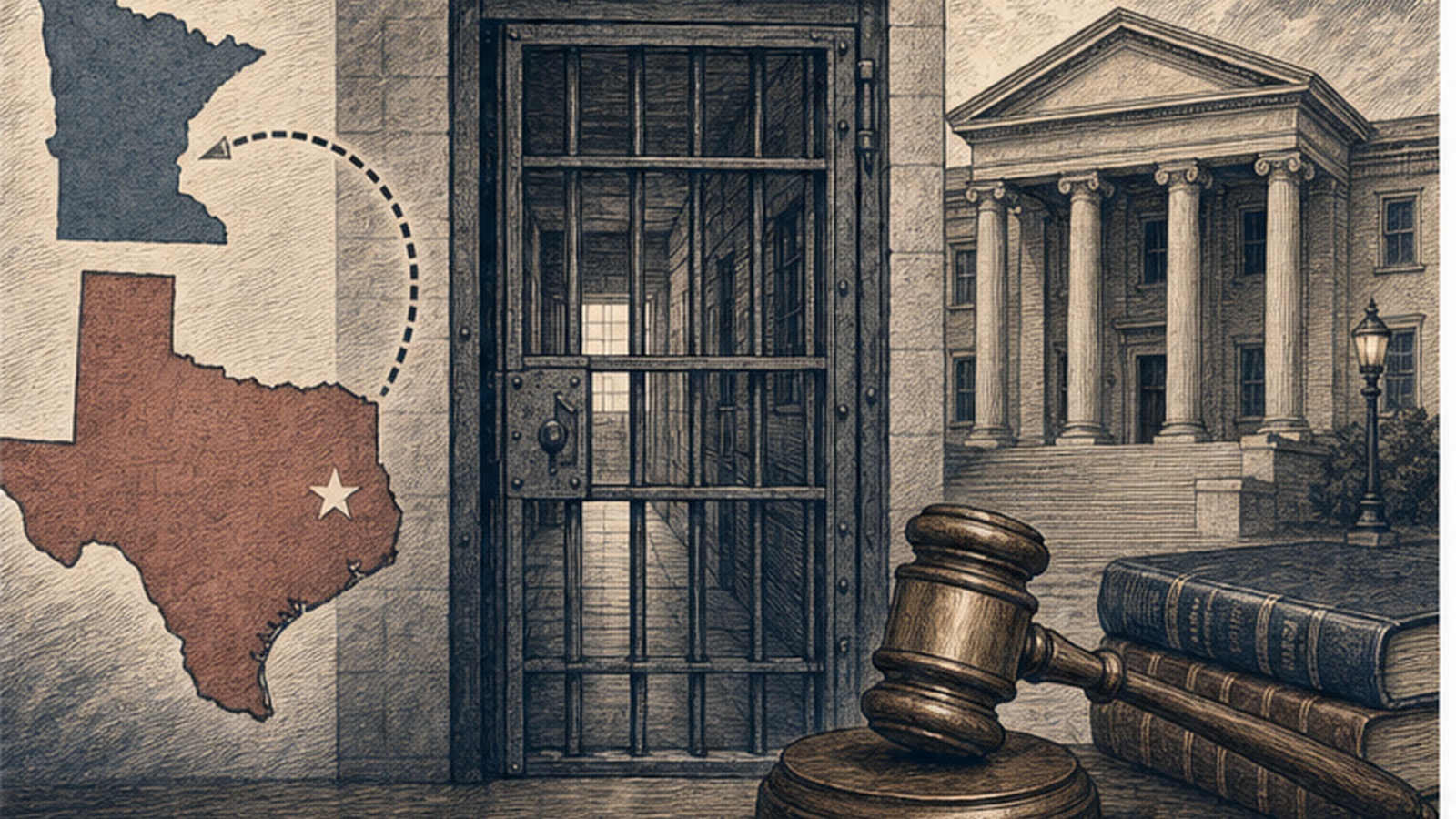
Castro had been held in Cameron County since his May 29 arrest in Brownsville. Minnesota Gov. Tim Walz submitted an extradition request, but Texas Gov. Greg Abbott had not formally granted or rejected it when Minnesota sought emergency relief in federal court. U.S. District Judge Fernando Rodriguez Jr. declined to immediately compel the transfer, concluding that the state process had not reached a final decision that the court could order Texas to carry out.
Castro was released at about 7 a.m. local time, according to the Cameron County Sheriff's Department. His release did not dismiss the Minnesota indictment, resolve the underlying shooting or prevent later proceedings. It changed his custody status while a dispute continued over how and when one state can force another governor to act on an extradition demand.
The criminal case arose from the shooting of Sosa-Celis during an immigration enforcement surge. Minnesota authorities allege Castro assaulted him and made false statements about the circumstances. Defense arguments and a complete evidentiary record have not yet been tested at trial. Any account of the case must therefore distinguish the allegations in charging documents from adjudicated facts.
Extradition between states ordinarily moves through an executive process. The demanding state sends formal papers; the governor of the asylum state reviews them; and the accused person can challenge custody through limited legal procedures. The unusual feature here is the collision between a state prosecution, an officer's federal employment and a governor's unresolved response. Minnesota argued that delay frustrated its ability to enforce its criminal laws. Texas maintained that its governor had not completed the decision the federal lawsuit sought to command.
The judge's ruling addressed that procedural posture rather than Castro's guilt or innocence. It did not determine whether the shooting was justified, whether Minnesota's charges are supported or whether Texas ultimately must surrender him. Those questions require separate decisions by executive officials and courts.
The next developments to watch are concrete: whether Abbott formally acts on the extradition request, whether Minnesota renews its federal challenge after such action, whether additional federal charges are filed and whether Castro appears in proceedings on the state indictment. Until then, the accurate description is narrower than either side's political language: an accused federal officer has been released from Texas custody, and Minnesota's criminal case remains pending.
Sources
- Associated Press — ICE officer’s release from Texas jail opens a new front in extradition fight (08-27-2026)
- Texas Tribune — ICE officer in Minnesota-Texas extradition fight is freed from jail (08-27-2026)
- Minnesota Attorney General — August 27 statement on Christian Castro’s release (08-27-2026)