
Business & Economy
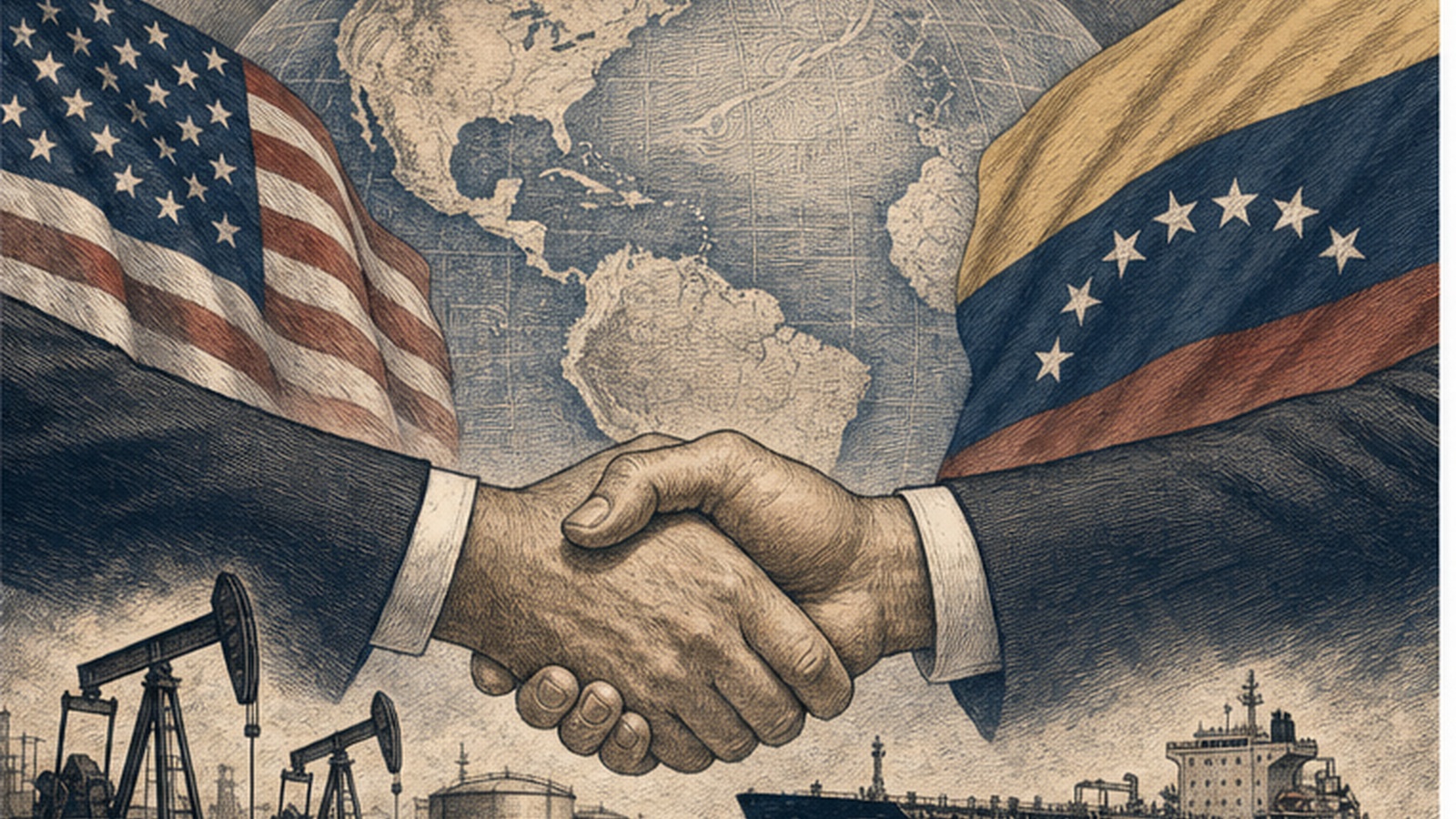
President Donald Trump announced an energy agreement with Venezuela that he described as the largest oil deal in history, saying it gives the United States majority control over more than 65 billion barrels of Venezuelan reserves. He said the arrangement would more than double American reserves, lower gasoline prices and strengthen relations between Washington and Caracas. The scale of the claim makes the announcement important. The absence of a published operating agreement makes careful qualification equally important.
Trump credited senior members of his administration, Venezuela's interim leadership and private business. Earlier in the year he had said American oil companies could invest at least $100 billion in Venezuelan infrastructure and that Venezuela would allow the United States to refine and sell large quantities of crude. Those statements describe an intended direction, but they do not answer who legally owns the oil, how revenue will be divided or which companies have accepted financial responsibility.
Venezuela holds the world's largest proved crude reserves, estimated near 303 billion barrels. Much of that resource is extra-heavy oil that requires specialized production, transport and refining. Reserve totals therefore cannot be treated as barrels ready for immediate delivery. Years of underinvestment, power and equipment problems, sanctions, unresolved creditor claims and deteriorated infrastructure affect the pace at which production can increase.
For American consumers, the connection between an international reserve agreement and retail gasoline prices is neither direct nor immediate. Pump prices respond to global crude benchmarks, refinery capacity, seasonal fuel requirements, inventories, transportation constraints, taxes and local competition. Additional Venezuelan supply could matter if it is produced reliably and reaches compatible refineries. A political announcement alone does not create that supply.
The legal framework is another unresolved issue. Readers should look for the contracting parties, the authority used by both governments, the treatment of existing sanctions and licenses, and the status of prior joint ventures or claims. A complete agreement should also identify environmental obligations, labor and security responsibilities, payment mechanisms, audit rights and dispute-resolution procedures.
The Ledger's standard is to separate a consequential announcement from a completed transaction. The claim deserves prominent coverage because even partial implementation could reshape trade, investment and diplomacy. It also deserves continuing scrutiny because the most important terms remained outside the public record at the edition's press-time cutoff. The next meaningful development is not another superlative. It is a document that allows the public to test the promise against enforceable obligations and a realistic production schedule.
Sources
- Associated Press — What we know about Trump’s deal giving US access to vast oil reserves in Venezuela (08-29-2026)
- CBS News — Trump says U.S. now has majority control of Venezuelan oil reserves (08-29-2026)